
Managed Cybersecurity Services Support Data Encryption
Cybercriminals are launching attacks at businesses of all sizes, and those that don’t take action risk losing revenue and their reputation. The global cost of managed cybersecurity services and data breaches is predicted to reach $10.5 trillion annually by 2025, with small- and medium-sized enterprises (SMEs) disproportionately bearing the brunt of these threats due to lack of resources and expertise.
MSSPs can help, providing 24/7 network monitoring, threat detection, and response services without the cost of a full-time security team. They operate from high-availability, secure operations centers to reduce the number of people needed to maintain a business’s acceptable security posture.
An MSSP can perform penetration testing (pentests), a simulated cyber attack performed by the provider against a customer’s network to identify and test their security effectiveness. Additionally, they can offer managed firewall services to monitor and maintain the integrity of a client’s firewall defenses against incoming and outgoing malicious traffic.
A key component of MSSPs is their threat intelligence capabilities, enabling them to provide clients with the latest research and knowledge about prevailing threats and vulnerabilities. This can include tools, technology recommendations, and guidance on how to best implement them in a client’s environment.
In addition to providing 24/7 network monitoring and threat detection, an MSSP can perform post-incident analysis and remediation to minimize the impact of a breach or cyberattack. They can also provide dark web monitoring to detect and mitigate the exposure of a client’s sensitive data on unsecure platforms, helping to prevent identity theft and financial fraud.
How Do Managed Cybersecurity Services Support Data Encryption?
Another key managed cybersecurity services offered by an MSSP is endpoint detection and response (EDR). As our work-from-anywhere culture continues to grow, so do the risks associated with employees accessing corporate resources from personal devices and third-party networks. With EDR, an MSSP can monitor and collect endpoint data in real time to detect suspicious activities. They can then block these behaviors, and provide remediation steps to bolster an organization’s resilience against attacks.
Often, cyberattacks leverage vulnerabilities that are not patched or updated. This can be due to outdated software that no longer receives regular developer support, or even simply a misconfiguration that allows attackers to gain access. An MSSP can scan a client’s systems for these vulnerabilities and recommend any necessary patches to close the vulnerability.
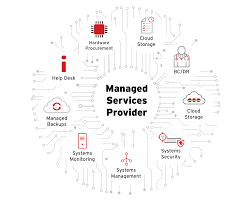
Unlike MSPs, which focus on IT management services, an MSSP is exclusively focused on security and operates out of a security operations center (SOC) to deliver around-the-clock monitoring and detection of cybersecurity threats. In addition to offering comprehensive protection, a good MSSP can seamlessly integrate with an existing IT team to expand their role in managing the company’s security infrastructure and protecting digital assets. In addition, they can offer a broad range of managed security services to address a variety of threats, including malware, ransomware, and phishing. This ensures that a company is protected from an ever-evolving threat landscape with the flexibility to scale its security solutions with its business. This peace of mind allows a company to focus on what matters most, achieving its business goals.