
Automation Impact Pcb Manufacturing Assembly
As the electronic device market continues to expand, pcb manufacturers must be capable of rapidly adapting production capacities to accommodate growing demand. Automated systems excel in this regard, facilitating scalability that allows companies to meet evolving customer needs without compromising quality or speed. This is accomplished through advanced automation processes that streamline operations and optimize workflows. Moreover, automated processes offer superior levels of precision, ensuring that every pcb assembly meets stringent industry standards before it is sent to the next stage of production.
The landscape of pcb manufacturing assembly is continually evolving, bolstered by a variety of technological advancements that promise to transform the industry. These include advanced robotics that enable more precise pcb assembly, minimizing human error while boosting productivity. Furthermore, intelligent design software facilitates more efficient production and reduces overall operational costs. These systems are also capable of performing a variety of tasks that would be impossible for humans to perform manually, including component placement, soldering, and inspection.
Automated pcb assembly involves a series of complex processes that begin with the procurement of high-quality electronic components. Once these components are sourced, they are placed on the pcb by automated machines known as pick-and-place machines. Next, the pcb undergoes a process called reflow soldering to melt the solder paste and create reliable electrical connections. Finally, the pcb undergoes an in-depth inspection and testing process to ensure that it is free from defects.
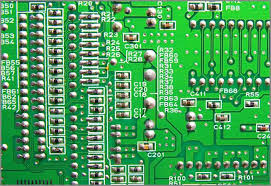
Advancements in Automation Impact Pcb Manufacturing Assembly
These sophisticated technologies dramatically increase pcb assembly efficiency, optimizing resource utilization and reducing waste during the manufacturing process. As a result, the cost of producing a pcb assembly decreases, making it more affordable for consumers. Additionally, the use of intelligent robotics enables manufacturers to achieve economies of scale that would otherwise be unattainable. This provides a competitive advantage by allowing them to offer low prices while maintaining robust profit margins.
Another significant development is the introduction of smart manufacturing practices, which leverage IoT and automation to boost production efficiency and product quality. These advanced systems facilitate real-time monitoring and optimization through closed feedback loops. This allows for more accurate root-cause analysis and allows pcb manufacturers to make informed decisions regarding source parameter adjustments. This enables them to improve production scalability and maintain optimal quality in every step of the manufacturing process.
In addition, smart manufacturing allows for a higher degree of traceability in the pcb manufacturing process. This is particularly critical for complex pcbs that require rigorous electromagnetic compatibility (EMI) tests and other functional evaluations. These capabilities enable pcb manufacturers to track and trace each component in the circuit board assembly, providing complete visibility into production processes. This enables manufacturers to close the feedback loop with designers and address issues immediately, significantly improving overall quality in pcb assembly. As a result, these technologies are helping to shape the future of pcb manufacturing assembly, ushering in a new era of precision and reliability for the electronic industry.