
benefits of using staking pins in Pcb assembly companies
Staking pins, also known as alignment pins or tooling pins, are commonly used in PCB assembly companies to aid in the accurate alignment and assembly of PCBs and their associated components. These small, cylindrical pins serve as precise reference points, ensuring proper alignment between different layers of the PCB stack-up, as well as between the PCB and its corresponding fixtures or tooling. While seemingly simple in design, staking pins offer a range of benefits that contribute to the efficiency, accuracy, and reliability of the PCB assembly process.
One of the primary benefits of using staking pins is improved accuracy and consistency in PCB assembly. By providing precise reference points for component placement and alignment, staking pins help to ensure that components are positioned correctly on the PCB during assembly. This is particularly important for high-density PCBs with closely spaced components, where even slight misalignments can lead to electrical shorts, signal integrity issues, or assembly defects. Staking pins help to minimize these risks by providing reliable alignment throughout the assembly process, resulting in higher yield rates and fewer rework requirements.
Moreover, staking pins enhance the efficiency of pcb assembly companies by streamlining setup and changeover procedures. During the setup phase, staking pins are used to precisely position the PCB and its associated tooling or fixtures on assembly equipment, such as pick-and-place machines or soldering stations. Once the initial setup is complete, staking pins serve as stable reference points that facilitate quick and accurate changeovers between different PCBs or assembly jobs. This reduces downtime between production runs, maximizes equipment utilization, and improves overall workflow efficiency for PCB assembly companies.
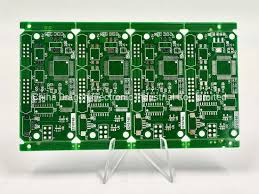
What are the benefits of using staking pins in Pcb assembly companies?
Another benefit of using staking pins is improved reliability and repeatability in the assembly process. Staking pins provide a stable and consistent reference frame for component placement and soldering, minimizing variability between individual PCBs within a production batch. This helps to ensure uniform quality and performance across all assembled PCBs, regardless of production volume or batch size. Additionally, staking pins enable repeatability in assembly processes, allowing PCB assembly companies to achieve consistent results with minimal variation between different manufacturing runs.
Furthermore, staking pins contribute to the prevention of damage or warping during the assembly process. By securely holding the PCB in place and preventing movement or misalignment, staking pins help to reduce the risk of damage to delicate components or solder joints caused by vibrations or mechanical stresses. This is especially important for assemblies with large or heavy components, where even slight movement during assembly can lead to damage or reliability issues. Staking pins provide stability and support, ensuring that the PCB remains flat and intact throughout the assembly process, thereby preserving its structural integrity and performance.
In addition to these functional benefits, staking pins also offer cost savings and process optimization for PCB assembly companies. By minimizing assembly defects, reducing rework requirements, and enhancing workflow efficiency, staking pins help to lower production costs and improve overall profitability. Additionally, the use of staking pins enables PCB assembly companies to meet stringent quality standards and customer specifications, enhancing their reputation and competitiveness in the marketplace.
In conclusion, staking pins play a vital role in the PCB assembly process, offering a range of benefits that contribute to improved accuracy, efficiency, reliability, and cost-effectiveness. From facilitating precise alignment and setup to enhancing repeatability and preventing damage, staking pins are indispensable tools for PCB assembly companies seeking to achieve high-quality, consistent results in their manufacturing operations. As technology continues to evolve and demand for advanced electronic devices grows, staking pins will remain essential components in the arsenal of tools used by PCB assembly companies to meet the challenges of modern electronics manufacturing.