
key components of PCB assembly
Printed Circuit Board (PCB) assembly is a meticulous process that involves the integration of various components onto a bare PCB to create functional electronic devices. Understanding the key components of PCB assembly is essential for grasping the intricacies of this manufacturing process and its role in the creation of modern electronics.
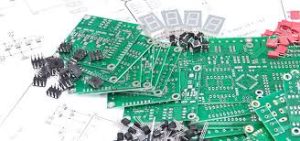
At the heart of PCB assembly are the bare PCBs themselves. These boards serve as the foundation upon which electronic components are mounted and interconnected. Fabricated from materials such as fiberglass, epoxy resin, or composite materials, bare PCBs feature conductive pathways, known as traces, that form the electrical connections between components.
One of the primary components of pcb assembly is solder paste. Solder paste is a mixture of tiny solder particles and flux, which is applied to the surface of the bare PCB using a stencil. This paste acts as an adhesive that holds the components in place during the soldering process, facilitating the creation of secure electrical connections.
What are the key components of PCB assembly?
Electronic components form another crucial aspect of PCB assembly. These components include resistors, capacitors, integrated circuits (ICs), connectors, and various other devices that perform specific functions within the electronic circuit. These components come in a wide range of sizes, shapes, and specifications, and their selection is based on the requirements of the design.
The pick-and-place machine is an essential tool in the PCB assembly process. This automated machine is responsible for accurately placing electronic components onto their designated positions on the PCB. Equipped with high-speed robotic arms and precision placement mechanisms, pick-and-place machines ensure that components are aligned and oriented correctly before soldering.
Soldering plays a vital role in PCB assembly, enabling the creation of secure electrical connections between components and the PCB. There are several soldering techniques used in PCB assembly, including reflow soldering, wave soldering, and hand soldering, each suited to different types of components and production requirements.
Reflow soldering is a common technique used to solder surface-mount components onto the PCB. During reflow soldering, the PCB assembly is subjected to controlled heat, causing the solder paste to melt and create secure bonds between the components and the PCB. This process ensures reliable electrical connections and mechanical stability.
Wave soldering, on the other hand, is typically used for through-hole components. In this process, the assembled PCB is passed over a wave of molten solder, which flows through the holes in the PCB and forms solder joints with the component leads. Wave soldering is well-suited for high-volume production and provides robust solder joints.
Inspection and testing are critical components of PCB assembly, ensuring the quality and reliability of the finished product. Automated optical inspection (AOI) systems are commonly used to detect defects such as missing components, misalignment, or soldering issues. Additionally, functional testing may be performed to verify the functionality and performance of the assembled PCB.
In conclusion, the key components of PCB assembly work together seamlessly to transform bare PCBs into fully functional electronic devices. From the selection and placement of electronic components to the soldering techniques employed, every aspect of the assembly process contributes to the creation of high-quality PCB assemblies. As technology continues to advance, innovations in PCB assembly techniques and technologies will play a crucial role in shaping the future of electronics manufacturing.