
HDI Printed Circuit Boards Compare to Flexible PCBs
The hdi printed circuit board has a higher interconnection density than traditional PCBs, resulting in smaller boards with more electrical performance. This allows manufacturers to create more compact products without sacrificing functionality or signal accuracy. Compared to traditional PCBs, hdi boards have lower weight and material costs, are more conducive to advanced assembly techniques, and offer better improvements in signal integrity, electromagnetic interference (EMI), thermal management, and power efficiency.
The high-density construction of hdi printed circuit boards is also able to accommodate more components in the same footprint, further cutting down on production costs. This makes them suitable for many different applications, including wearables and implantable devices. Compared to rigid PCBs, flex and hdi flex PCBs provide greater flexibility and are ideal for curved and angled shapes. They are also suited for tighter routing of high-speed digital signals, as well as for high-reliability environments like automotive and aerospace.
However, there are a few things to consider before making the decision to use hdi or flex circuits. First, consider how much the additional cost will be. The price of a hdi PCB depends on the type and amount of vias, through-holes, and microvias. Additionally, the number of layers in your hdi PCB will impact price, as will the type of stackup you choose.
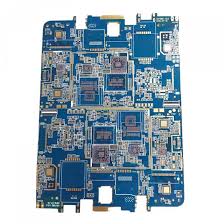
How Do HDI Printed Circuit Boards Compare to Flexible PCBs?
For example, a 2-n-2 stackup is more complex than a 1-n-1 and will be more expensive. Another significant factor is the selection of a high-quality PCB manufacturer that can reliably produce your product. This requires a close partnership with the fabrication company early in your design process, to ensure that your board can be manufactured. Using a reputable PCB manufacturer with a track record of quality and speedy turnaround times can help reduce your overall costs.
When considering a hdi PCB, it is also important to take into account the layout and design. This will have a direct impact on the price. Having a clear layout with well-placed pads, traces, and microvias will reduce the time needed for assembly and improve performance. It is also essential to choose a quality metallization partner. This will minimize the risk of etching errors and improve performance. This is especially crucial for high-speed signals, as it can lead to signal attenuation, noise, and jitter.
To avoid etching issues, it is best to select a copper that is higher-purity than normal and to avoid exposing the underlying dielectric layer to the metalization process. Depending on your design, you may also want to consider using a microvia-in-pad technique, which involves placing a small trace section from a pad onto a microvia to complete the connection to an internal layer. This helps to improve reliability if drill wander causes a slight deviation from the desired hole location.
Lastly, you should also pay attention to the surface finishes and plating options of your hdi PCB. Selective plating and dual-surface finishes can add cost. It is also beneficial to use a minimum number of layers, as this will lower the cost per unit.