
Steps Involved in Rigid Flex PCB Supplier
Rigid flex PCBs are hybrids of rigid and flexible circuit board technologies, combining the strengths of both into one package. The rigid sections provide structural stability and support for components, while the flex sections allow dynamic movement, bending, and folding. Rigid flex circuits can also incorporate mounting holes on both sides of the board, allowing for increased component density and improved functionality in compact electronic devices.
The fabrication process for a rigid flex circuit begins with preparing the raw materials. Then, the cover lay is laminated using specified limits of heat, pressure, and vacuum. This is done to ensure the proper adhesion between layers. If stiffeners are required as part of the design, they are applied at this time as well.
Next, the copper circuit layers are etched to form the desired circuit pattern. This step is accomplished by spraying an etching solution over the copper laminate, or by dipping it in an etching bath. After the etching is complete, a photosensitive etch resist is applied to the laminate surface. This masks the areas where copper is to be exposed and developed, forming the desired rigid PCB layer stack.
After the photoresist is positioned on the laminate, it is exposed and developed using UV light. Afterward, copper is chemically plated over the exposed areas to make them conductive, just as it would be on a regular rigid PCB. The flex sections can be provided with either a through-hole or a via, and the final through-plated holes in the rigid section are routed.
The finished rigid flex circuits are trimmed to the desired size and shape with a blade, or by using a specialized CNC machine. Finally, the boards are inspected to make sure that they meet the IPC-ET-652 standards. They are then shipped out for assembly, testing, and distribution.
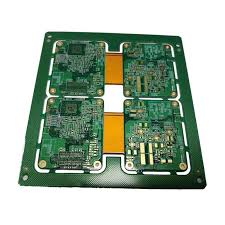
What Are the Steps Involved in Rigid Flex PCB Supplier?
Among the many benefits of rigid flex circuits are their durability and reliability. These characteristics are especially important in high-stress applications, where a failure could be dangerous. For example, a rigid-flex PCB might be used in medical imaging equipment, military missile guidance systems, or smart control systems. Rigid flex circuits are also an excellent choice for applications that require both flexibility and space efficiency, such as mobile phone or digital camera displays. They are also commonly used in vehicles and wearable electronics, as well as industrial robotics.
Temperature control plays a pivotal role in the manufacturing process of rigid flex pcb supplier (Printed Circuit Boards), impacting both the quality and reliability of the final product. Rigid flex PCBs are crucial components in various electronic devices, offering flexibility and durability in design. The temperature control throughout the manufacturing process significantly influences the material properties, fabrication techniques, and overall performance of these boards.
During the fabrication of rigid flex PCBs, temperature control is crucial in several stages. Firstly, in the initial stages of material preparation, temperature control ensures the proper curing of substrates and bonding materials. The precise temperature regulation ensures the elimination of defects such as delamination or warping, which can compromise the structural integrity of the PCB.
Furthermore, temperature control plays a vital role in the etching and plating processes. Consistent temperatures facilitate uniform etching of copper layers and deposition of plating materials, ensuring precise circuit patterns and reliable electrical connections. Fluctuations in temperature can lead to uneven etching, poor adhesion of plating materials, and ultimately, defective PCBs.